Oral appliances Review
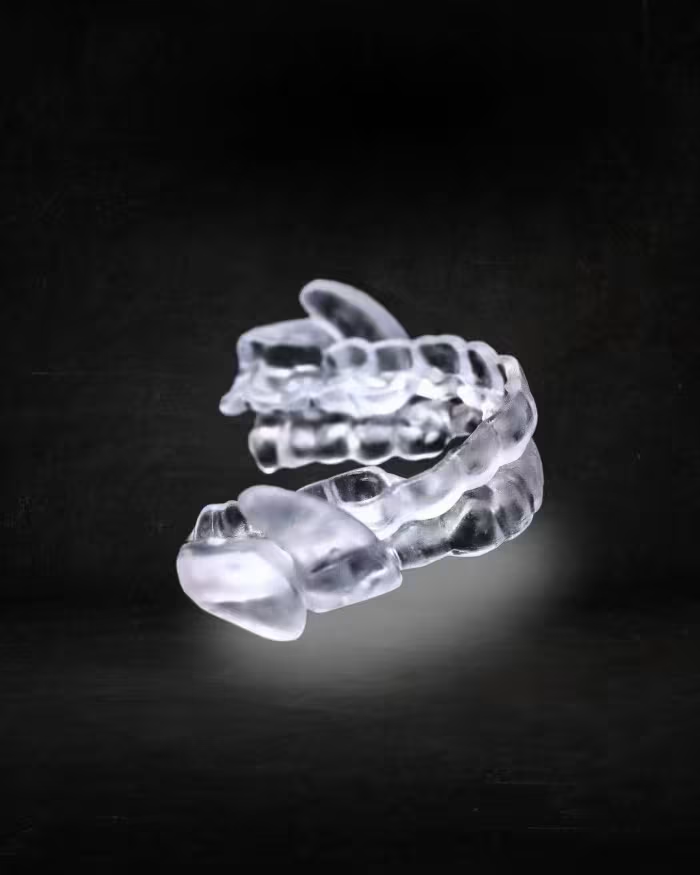
Oral Appliances
Medical-grade dental devices designed to treat obstructive sleep apnea, snoring, and temporomandibular disorders via airway management.
How This Score Is Calculated
- Sources analysed: 13 reviews
- Sentiment-only: 13 sources (weighted 1.0×)
- Split: 10 Positive · 2 Mixed · 1 Negative
- Raw weighted average: 8.2
- Formula: Σ(score × weight) ÷ Σ(weight)
- Final score: 8.2/10 (clamped, rounded to 1 decimal)
Algorithmically calculated from source data. No manual adjustments.
- Most reviewed featureClinical Effectiveness (13/13)
- Most praisedPatient Adherence
- Most criticisedInsurance Complexity
- Reviewer consensus levelHigh
Oral appliances have evolved from simple mandibular advancement tools into sophisticated, FDA-cleared medical devices capable of treating even severe obstructive sleep apnea. They are widely praised for superior patient adherence compared to CPAP, though they require professional fitting and face complex insurance reimbursement hurdles. While highly effective, they are not one-size-fits-all and require careful selection based on individual dental anatomy and clinical comorbidities.
🔧 Key Specifications
Specifications sourced from reviewer mentions. Verify with manufacturer for complete details.
- Primary Indication: OSA, Snoring, TMD
- Materials: 3D-printed Polyamide 12 (Nylon), Acrylic
- Mechanism: Mandibular advancement, Tongue stabilization, Nasal dilation
- FDA Status: Various clearances (including severe OSA)
- Technology: CAD/CAM design, Integrated smart biosensors (emerging)
- Fitting: Professional medical prescription required
📊 What Reviewers Say — Feature by Feature
6 features evaluated across 13 sources.
👍 Key Strengths
- High patient compliance vs CPAP
- FDA-cleared for severe apnea
- Durable 3D-printed nylon construction
- Non-invasive, no lifetime nightly use
- Objective data via smart sensors
👎 Key Weaknesses
- Complex insurance reimbursement
- Cannot be easily adjusted chairside
- Risk of dental movement/malocclusion
- Requires professional medical oversight
💰 Value for Money Analysis
While out-of-pocket costs can be significant, the long-term clinical benefits and reduced need for surgery or permanent CPAP reliance provide strong value. Patients are advised to utilize financing options like CareCredit to manage initial costs.
4 of 13 sources commented on price or value.
⚡ Where Reviewers Disagreed
The following areas saw meaningful disagreement across sources.
- TMD Effectiveness: 1 source praised them for reducing joint loading, while another noted that evidence for pain reduction is no better than simple jaw exercises. Disagreement stems from the lack of robust, high-quality clinical data compared to standardized physical therapy.
🎯 Who This Product Is For
Reviewer recommendations for different target audiences and use cases.
🛠️ Best Use Cases
- Snoring ReductionHighly effective for reducing airway vibration and improving sleep architecture without mechanical titration.Great
- Severe OSA TreatmentA newly validated use case for specific FDA-cleared devices, providing an alternative to surgery or neurostimulation.Good
- TMD Pain ManagementUseful for reducing muscle activity, though effectiveness vs. simple exercises is debated.OK
🔀 Alternatives Mentioned by Reviewers
Reviewers compare oral appliances to several existing therapies for sleep-disordered breathing.
- CPAP Therapy — The traditional gold standard for OSA. While effective, reviewers highlight that oral appliances offer higher patient compliance and better comfort for those who cannot tolerate mask-based therapy.
- Hypoglossal Nerve Stimulation — An invasive surgical alternative for severe OSA. Oral appliances are presented as a non-invasive, non-surgical alternative to this procedure.
- Jaw Exercises/Physical Therapy — A minimal-treatment approach for TMD. Reviewers note that in some cases, these simple exercises are just as effective as intraoral splints for pain management.
- Consumer Wearables (Oura/Apple Watch) — Compared against smart oral appliances. Reviewers note that while wearables are convenient, smart oral appliances offer medical-grade data accuracy by measuring from inside the mouth.
Alternatives sourced exclusively from reviewer mentions.
🛒 Buyer's Guide
✅ Buy This If…
- You are CPAP-intolerant and need a non-invasive airway management solution.
- You have mild to moderate OSA and prefer a device that is easier to travel with.
- You require a durable solution and are interested in 3D-printed, custom-fitted technology.
❌ Skip This If…
- You have specific dental anatomy (like short arches) that may cause retention issues.
- You are unwilling to undergo professional medical fitting and ongoing dental monitoring.
- You expect insurance to cover the device without a complex, potentially lengthy approval process.
⚠️ Things to Check Before Buying
- Verify your specific insurance policy coverage for oral appliance therapy.
- Discuss the risk of long-term tooth movement with your dentist.
- Consider the need for a professional fitting to ensure proper airway patency.
📈 Sentiment Trends Over Time
Reviews span 2024. The following shifts were detected:
- Targeted Indications — Recent FDA approvals for severe OSA have significantly broadened the market perception of what these devices can treat.
- Data Collection — The integration of smart biosensors is shifting the perception of oral appliances from "passive" devices to active monitoring tools.
Oral appliances have matured into a highly effective, evidence-backed therapy for sleep apnea, especially for those who struggle with traditional CPAP compliance. Their move toward 3D-printed nylon materials and smart sensor integration marks a significant leap in durability and efficacy. While insurance hurdles and the potential for long-term dental side effects remain, they represent the best non-invasive alternative for most patients. We highly recommend them for anyone seeking a comfortable, high-adherence solution for OSA.
PLG_CONTENT_IMAGEGALLERY_ERROR_NO_IMAGES
Reviewer Perspectives & Source Breakdown
Oral Appliances Gain Ground in Severe Sleep Apnea Treatment | Sleep Revi...
Vivos Therapeutics received the first FDA clearance for an oral appliance to treat severe obstructive sleep apnea (OSA). These devices aim to provide lasting airway improvements and serve as an alternative to CPAP therapy.
Pros
- FDA-cleared for severe OSA treatment
- Potential for permanent airway improvement
- No lifelong treatment required
- Good alternative for CPAP-intolerant patients
Cons
- Typically requires months of nightly usage
- Requires professional medical prescription and oversight
ProSomnus Oral Appliances to Be Highlighted in Research | Sleep Review -...
Research presented at the 2024 AADSM meeting highlights that ProSomnus oral appliances are a safe, effective, and well-adhered alternative to CPAP therapy for treating obstructive sleep apnea.
Pros
- High patient adherence rates
- Effective for mild, moderate, and severe sleep apnea
- Excellent safety record
- Supported by high-quality scientific research
- Virtual workflow increases treatment accessibility
Cons
Little-Known Ways to Pay for Oral Appliances | Sleep Review - sleeprevie...
This article explores strategies to manage the financial barriers associated with oral appliance therapy for obstructive sleep apnea. It discusses insurance challenges, accidental device damage, extended warranties, and options for obtaining multiple units.
Pros
- Improved patient adherence compared to CPAP therapy
- Effective reduction in apnea-hypopnea index
- Various financing options like CareCredit available
- Replacement plans cover accidental damage like dog chewing
Cons
- Insurance coverage for oral appliances is often complex
- Out-of-pocket costs can be significant
- Manufacturer warranty periods may not align with insurance
- Replacing lost or stolen devices is usually not covered
Smart Biosensors for Oral Appliances Are on the Horizon | Sleep Review -...
Emerging smart sensors for oral appliances aim to monitor sleep metrics like AHI and brain waves in real-time. These devices could rival standard sleep studies by providing accurate, consistent data collection from inside the mouth.
Pros
- Enables real-time nightly tracking of sleep therapy efficacy
- Provides more accurate data than peripheral finger sensors
- Stable positioning within the mouth improves data consistency
- Allows for rapid titration based on nightly results
Cons
- Most devices are still awaiting regulatory approval
- Technology is currently in development or testing phases
FDA Clears First Oral Appliances to Treat Severe OSA | Sleep Review - sl...
Vivos Therapeutics received FDA clearance for its CARE oral appliances to treat moderate to severe obstructive sleep apnea. It is the first oral appliance approved for severe OSA, providing a non-invasive alternative to CPAP or surgery.
Pros
- First FDA-cleared oral appliance for severe OSA
- Non-invasive treatment option
- Does not require lifetime nightly use
- Reduces need for surgery or neurostimulation implants
Cons
- Some patients require aligners following treatment
How to Promote Nasal Breathing with Oral Appliances | Sleep Review - sle...
Promoting nasal breathing is crucial for effective obstructive sleep apnea management. Various oral appliance designs and accessories can help maintain lip competency and improve airway patency.
Pros
- Reduces airway collapsibility
- Improves sleep architecture
- Enhances oral appliance tolerability
- Prevents dry mouth and excess saliva
Cons
- Requires professional medical fitting
- Patient anatomy influences device success
- May require surgical intervention for severe obstruction
OrthoApnea Adds to Nylon Oral Appliances in US Market | Sleep Review - s...
The OrthoApnea NOA is an FDA-cleared, 3D-printed nylon oral appliance designed to treat mild to moderate obstructive sleep apnea. It utilizes biocompatible materials and precise customization to maintain an open airway through mandibular advancement.
Pros
- FDA-cleared for OSA and snoring
- Utilizes biocompatible polyamide 12 material
- Customized to patient's unique mandibular biomechanics
- 3D printing allows for precise, detailed structures
Cons
The New Case for Smart Oral Appliances | Sleep Review - sleepreviewmag.c...
The smart oral appliance market is gaining momentum through innovations in integrated sensors, potentially enabling more precise sleep monitoring and faster therapy titration. While these devices promise to bridge the gap between dentists and physicians, they face hurdles regarding clinical validation and the long-term sustainability of reimbursement models.
Pros
- Provides objective data on sleep quality and device efficacy
- Reduces latency in sleep therapy titration and validation
- Offers more stable sensor placement compared to wearables
- Potential for improved collaboration between dental and medical providers
Cons
- Risk of increased device complexity and maintenance issues
- Uncertainty regarding long-term insurance reimbursement and adoption
- Necessity for rigorous clinical and medical-grade validation
- Market potential threatened by autonomous transportation trends
New Research on Panthera Oral Appliances to Be Unveiled| Sleep Review - ...
Panthera Dental is presenting new 5-year study results and finite element analysis data regarding the safety and effectiveness of their 3D-printed oral appliances for sleep apnea.
Pros
- Supports robust effectiveness for sleep apnea treatment
- High rates of continued nightly patient use
- Uses advanced CAD/CAM 3D-printed technology
- Rigorous testing of biomechanical effects on teeth
Cons
Page 1 of 2