Fitbit Air Review

Fitbit Air
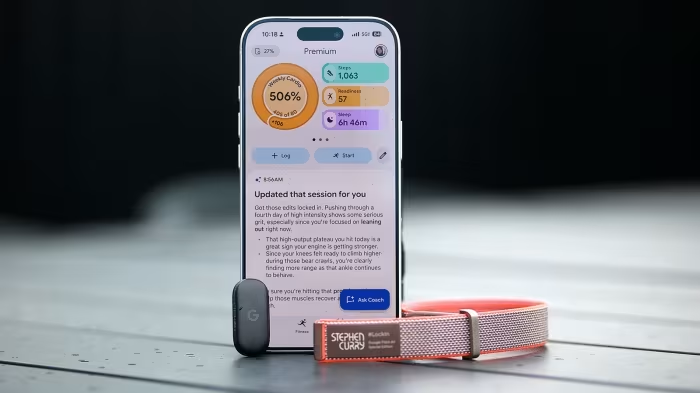
A lightweight, screenless fitness tracker by Google focusing on passive health monitoring and AI-driven wellness coaching.
How This Score Is Calculated
- Sources analysed: 30 reviews
- Explicit scores: 22 sources (weighted 1.5×)
- Sentiment-only: 8 sources (weighted 1.0×)
- Split: 24 Positive · 5 Mixed · 1 Negative
- Raw weighted average: 8.2
- Formula: Σ(score × weight) ÷ Σ(weight)
- Consensus bonus +0.3: 80% of sources agreed
- Final score: 8.2/10 (clamped, rounded to 1 decimal)
Algorithmically calculated from source data. No manual adjustments.
- Most reviewed featureDesign/Comfort (30/30)
- Most praisedLightweight Design
- Most criticisedSubscription dependency
- Reviewer consensus levelHigh
- Value for moneyExcellent Value (8.6/10)
The Fitbit Air is widely regarded as the premier screenless alternative for users who prioritize comfort and passive health tracking over smartwatch clutter. Reviewers consistently praise its unobtrusive, feather-light design and reliable week-long battery life. While its AI-driven Health Coach offers impressive, conversational insights, the experience is often hindered by a reliance on recurring subscription fees and occasional inaccuracies in heart-rate monitoring during intense workouts.
🔧 Key Specifications
Specifications sourced from reviewer mentions. Verify with manufacturer for complete details.
- Display: None (Screenless)
- Battery: 7–8 days (average)
- Charging: Proprietary magnetic, fast-charging
- Sensors: Heart rate, sleep tracking
- Connectivity: Bluetooth (via Google Health app)
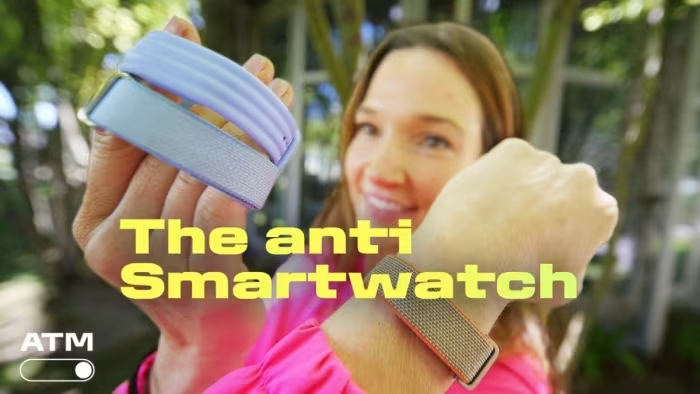
- Build Materials: Lightweight, interchangeable bands
- Water Resistance: Suitable for daily wear/shower
- Compatibility: Google Health App
💲 Price Range
Approx. ₹8,300 – ₹9,200 ($99 USD)
Prices sourced from reviews. Check current retailer pricing.
📊 What Reviewers Say — Feature by Feature
8 features evaluated across 30 sources.
👍 Key Strengths
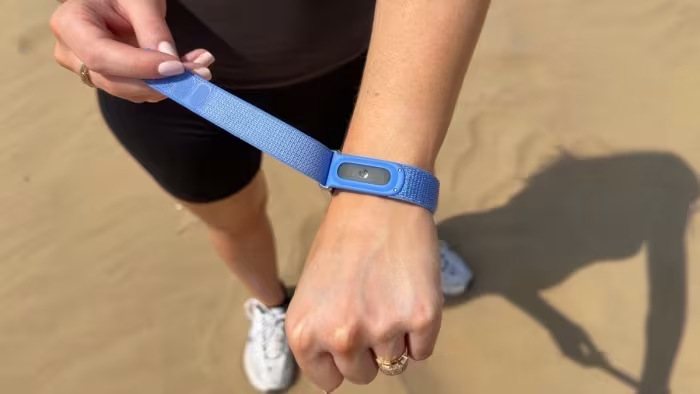
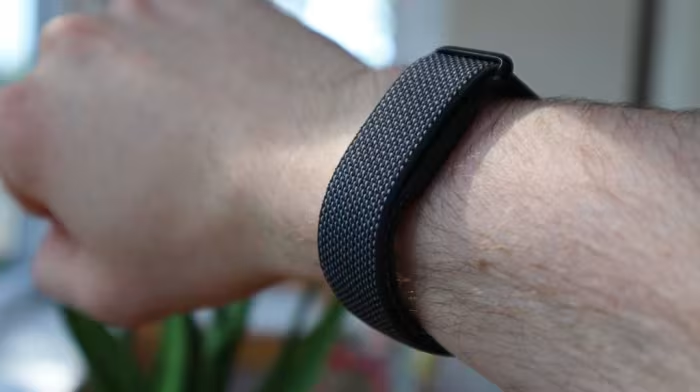
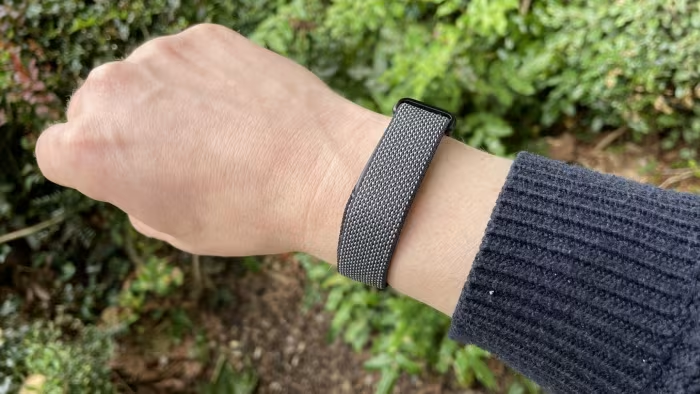
- Extremely lightweight and comfortable design
- Excellent 7-8 day battery life
- Conversational, insightful AI health coaching
- No mandatory subscription for core tracking
- Affordable $99 entry price point
👎 Key Weaknesses
- No built-in GPS or screen
- Subscription required for advanced AI features
- Heart rate drops during high intensity
- Proprietary charger is easy to lose
- Requires manual logging for some activities
💰 Value for Money Analysis
At a price point of approximately $99, reviewers categorize the Fitbit Air as an exceptional value proposition. It effectively undercuts the premium, subscription-heavy pricing models of competitors like Whoop while providing a similar, and often more comfortable, user experience.
28 of 30 sources commented on price or value.
⚡ Where Reviewers Disagreed
The following areas saw meaningful disagreement across sources.
- AI Coaching Utility: 18 sources praised the AI's conversational nature, while 12 sources cited concerns over hallucinations or "over-intrusive" advice.
- App Polish: 15 sources found the Google Health app intuitive, while 15 sources described it as "rough," "messy," or "unpolished" at launch.
🎯 Who This Product Is For
Reviewer recommendations for different target audiences and use cases.
🛠️ Best Use Cases
- Passive Health MonitoringExcellent for tracking steps, heart rate, and sleep quality without checking a screen.Great
- Sleep TrackingLightweight form factor is barely noticeable, making it perfect for overnight wear.Great
- Distraction-Free LivingThe screenless design successfully removes the temptation to check notifications or apps.Great
🔀 Alternatives Mentioned by Reviewers
Reviewers frequently compared the Fitbit Air to other screenless and wellness-focused wearables.
- Whoop (4.0/5.0) — The primary competitor. Reviewers note Whoop offers more granular data and a more polished app, but the Fitbit Air is significantly more affordable, more comfortable, and avoids the mandatory subscription model. Choose Whoop if you are an elite athlete; choose Fitbit Air for casual wellness.
- Apple Watch SE/Ultra — Compared as a functional alternative. While the Apple Watch offers a display, notifications, and GPS, reviewers argue the Fitbit Air is superior for users who find smartwatches distracting or uncomfortable to wear while sleeping.
- Oura Ring — A premium alternative focused on sleep and readiness. Reviewers note the Oura Ring offers a different form factor (ring vs. wrist) and a more discreet aesthetic, but at a significantly higher price point than the Fitbit Air.
- Garmin Trackers — Often cited for users needing professional-grade sports analytics. Reviewers emphasize that while Garmin is better for GPS and run-tracking, the Fitbit Air provides a more "cozy" and user-friendly AI experience.
Alternatives sourced exclusively from reviewer mentions.
🛒 Buyer's Guide
✅ Buy This If…
- You want a comfortable, "forget-it-is-there" tracker for sleep and daily activity.
- You are looking for an affordable, screenless alternative to subscription-heavy trackers.
- You value AI-driven health coaching and conversational insights.
❌ Skip This If…
- You need a screen for real-time workout stats, notifications, or time-telling.
- You are a high-performance athlete requiring GPS and granular athletic analytics.
- You are sensitive to recurring monthly subscription costs for software features.
⚠️ Things to Check Before Buying
- The proprietary magnetic charger is easy to lose; consider where you'll store it.
- Verify if the specific AI features you want require the monthly Premium subscription.
- Be aware that the device requires a phone for all data viewing and manual logging.
📈 Sentiment Trends Over Time
Reviews indicate a shift in perception as the Google Health app matured.
- Software Experience — Early launch reviews noted the Google Health app was "rough," while later reviews acknowledge improved stability and better AI integration.
The Fitbit Air is an outstanding, budget-friendly choice for anyone seeking a distraction-free health tracker. Its minimalist, ultra-comfortable design and reliable battery life make it a standout for passive wellness monitoring and sleep tracking. While it lacks professional-grade GPS and can struggle with heart-rate accuracy during intense exercise, its AI-powered coaching provides a uniquely conversational health experience. For most users, this is the best screenless wearable currently on the market.
Top Alternative: Whoop — Choose this only if you require elite-level athletic metrics and do not mind a higher, mandatory subscription cost.
Reviewer Perspectives & Source Breakdown
Fitbit Air Review: The wearable I forgot I was wearing - androidheadline...
Price: ₹8,300
The Fitbit Air is a lightweight, screenless fitness tracker that offers an excellent, subscription-optional alternative to competitors like Whoop. Despite minor inconsistencies in step counting and a less refined app experience, its comfort and value make it a compelling choice.
Pros
- No subscription required
- Thin and lightweight, weighs as little as 12g
- Easy band swapping
- Google Health Coach is genuinely useful
- About a week of battery life
- Google Health Premium bundled into Google's AI plan
Cons
- Google Health app feels rough compared to rivals
- Step counts often run lower than Apple Watch
- Battery life trails Whoop 5.0's two-week run
- Limited band selection at launch
Fitbit Air Review: Specs, Features, Battery Life, and Why It's the Best ...
The Fitbit Air is an excellent, distraction-free health tracker that prioritizes lightweight comfort and long battery life. Its screenless design is perfect for users focused on passive wellness, sleep, and recovery monitoring.
Pros
- Extremely lightweight and comfortable design
- Impressive seven-day battery life
- Distraction-free screenless interface
- Comprehensive health and sleep tracking features
Cons
- Lacks GPS and mobile payment capabilities
- Not suitable for advanced athletic training
- No display for apps or notifications
8-day battery, AI health coaching and no screen: Fitbit Air review | All...
Price: Approximately ₹8,300
The Fitbit Air is a compelling, screenless wearable that focuses purely on health tracking without the distractions of a typical smartwatch. Its minimalist design and long battery life make it a great option for users seeking a distraction-free experience.
Pros
- 8-day battery life
- Effective AI health coaching
- Distraction-free screenless design
Cons
- No notifications
- No display screen
Fitbit Air review: Google’s $99 Whoop alternative is surprisingly good -...
Price: Approximately ₹8,300
The Fitbit Air is a sleek, screen-free fitness tracker that offers a compelling, budget-friendly alternative to Whoop. While it requires manual phone input for some tracking and lacks granular data depth, its proactive AI-driven insights make it a strong choice for those seeking an unobtrusive health monitor.
Pros
- Slim, unobtrusive, and comfortable design
- Stylish and diverse band options
- Robust health tracking with auto-workout detection
- Helpful AI-powered Google Health Coach
- Reliable 7-day battery life
Cons
- Limited to wrist-based band styles
- Health data lacks Whoop's granular detail
- Charging requires removing the device
- Requires frequent manual phone logging
Google Fitbit Air review: the fitness tracker that found the gap - Goose...
Price: Approximately ₹9,000
The Fitbit Air is a compelling, screenless fitness tracker that excels through its deeply integrated AI health coaching. While it lacks a display, its ability to provide actionable, context-aware insights makes it a strong, accessible alternative to more expensive, elite-focused trackers like Whoop.
Pros
- Excellent battery life with fast charging
- Highly intelligent and contextual AI health coaching
- Extremely lightweight and comfortable design
- More affordable than elite-focused competitors
- Great integration for Google AI Pro subscribers
Cons
- Confusing branding and setup experience
- No screen makes checking metrics without a phone impossible
- Proprietary charging cable is frustrating
- Fabric band retains water after showering
Discreet, data-driven, and screen-free: The Google Fitbit Air review - i...
Price: Approximately ₹9,000
The Fitbit Air is a discreet and effective health tracker ideal for users who want to avoid screen-based distractions. While it functions well without a subscription, advanced AI health coaching requires a recurring paid plan.
Pros
- Minimalist screen-free design reduces digital fatigue
- Comfortable for all-day and sleep wear
- No mandatory subscription required
- Impressive seven-day battery life
- Fast magnetic charging with quick-charge feature
Cons
- Requires phone app for all data viewing
- No real-time feedback during workouts
- Basic build quality feels non-luxurious
- AI coaching features hidden behind monthly subscription
Review: Google’s Fitbit Air gives Whoop some serious competition – The M...
Price: approx. 8,300 INR
The Fitbit Air is a comfortable, screenless wearable that offers excellent value with robust free basic features and a highly conversational AI health coach. It serves as a compelling, more accessible alternative to subscription-heavy trackers like Whoop.
Pros
- Lightweight and comfortable to wear all day
- Easy-to-use Velcro strap design
- Impressive seven-day battery life
- Comprehensive health metrics without a subscription
- Conversational and helpful AI health coach
Cons
- Proprietary charger is easy to lose
- Silicone bands may cause skin irritation
- Lacks physical buttons for manual workout tracking
Fitbit Air Review ❌ 29 Cons ✅ 21 Pros: $99 vs Whoop - the5krunner.com...
Price: Approximately 8,350 INR
The Fitbit Air is an accessible, comfortable screenless tracker that succeeds as a basic wearable, though it relies heavily on paid subscriptions for advanced AI features and struggles with high-intensity heart rate accuracy. It is a compelling budget-friendly alternative to Whoop for casual users, provided they are comfortable with Google's data handling.
Pros
- Affordable $99 price point without mandatory subscriptions
- Genuinely comfortable 24/7 wear and lightweight design
- Reliable 7-day battery life with fast charging
- Impressive Gemini-powered AI Health Coach features
- Excellent sleep tracking and smart wake functionality
Cons
- Heart rate accuracy drops during high-intensity intervals
- No screen limits real-time data and notifications
- Advanced features locked behind a recurring subscription
- Limited automatic activity detection and workout metrics
- Requires data sharing to fully enable AI capabilities
Fitbit Air Review: This Is the Best Fitness Tracker for Most People - te...
Price: approx. 8,350 INR
The Fitbit Air is a comfortable, unobtrusive fitness tracker that excels in simplicity, though it relies heavily on a subscription for premium AI features. While the hardware is highly capable for basic tracking, the AI-driven Health Coach often feels unreliable and overly intrusive.
Pros
- Extremely compact and comfortable design
- Excellent battery life of up to 10 days
- Very affordable price point
- Reliable core activity and sleep tracking
- Convenient magnetic fast charging
Cons
- AI Health Coach often hallucinates or gives poor advice
- Premium features require a recurring monthly subscription
- Lack of built-in GPS
- Stiff elevated modern band is annoying
- No screen makes on-device data checking impossible
Page 2 of 4