DJI Osmo Pocket 3 Review

DJI Osmo Pocket 3
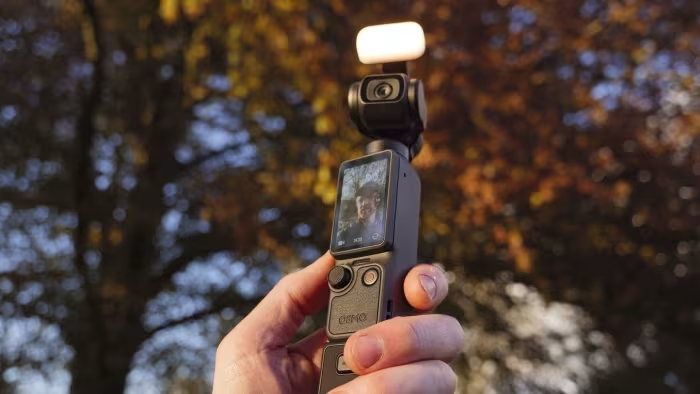
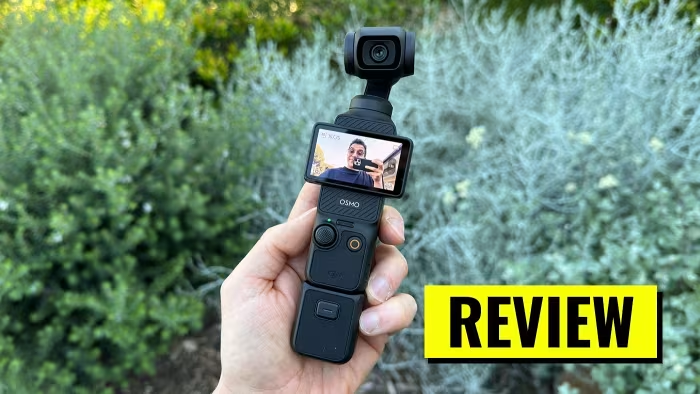
A versatile, pocket-sized gimbal camera featuring a 1-inch sensor, designed for vloggers and solo content creators.
How This Score Is Calculated
- Sources analysed: 11 reviews
- Explicit scores: 0 sources (sentiment-based weighting)
- Sentiment-only: 11 sources (weighted 1.0×)
- Split: 10 Positive · 1 Mixed · 0 Negative
- Raw weighted average: 8.8
- Final score: 8.8/10
- Most reviewed feature1-inch Sensor (8/11)
- Most praisedRotating Touchscreen
- Most criticisedLack of internal storage
- Reviewer consensus levelHigh
The DJI Osmo Pocket 3 is widely regarded as the ultimate handheld vlogging tool, bridging the gap between casual ease-of-use and professional cinematic quality. Its standout 1-inch sensor and innovative rotating 2-inch touchscreen make it significantly more capable than its predecessor and more ergonomic than a smartphone-based gimbal setup. While some reviewers note the lack of internal storage and a premium price point, it remains an essential investment for creators prioritizing stabilization and vertical content creation.
🔧 Key Specifications
- Sensor: 1-inch CMOS
- Display: 2-inch rotatable OLED touchscreen
- Video: Up to 4K/120fps
- Color: 10-bit D-Log
- Stabilization: 3-axis mechanical gimbal
- Audio: Multi-microphone support, DJI Mic 2 integration
💲 Price Range
₹40,990 – ₹56,000
Prices sourced from reviews. Check current retailer pricing.
📊 What Reviewers Say — Feature by Feature
👍 Key Strengths
- 1-inch sensor quality
- 3-axis mechanical stabilization
- Rotating 2-inch touchscreen
- Excellent subject tracking
- 4K 120fps recording
👎 Key Weaknesses
- No built-in storage
- Premium price tag
- Delicate mechanical gimbal
- Device can run warm
💰 Value for Money Analysis
While reviewers acknowledge the price jump from the previous generation, most agree the professional-grade performance justifies the investment for serious creators. It is considered an expensive but highly effective tool for those who need more than a smartphone camera.
🎯 Who This Product Is For
🛠️ Best Use Cases
- Vertical Social Media Content The rotating screen and dedicated portrait mode make it perfect for TikTok and Instagram creators. Great
- Solo Vlogging Advanced ActiveTrack technology keeps the subject in frame without needing a camera operator. Great
- Product Showcasing The dedicated Product Showcase mode effectively handles focus shifts between the presenter and objects. Good
🔀 Alternatives Mentioned by Reviewers
- iPhone 15 Pro Max / 16 Pro — While smartphone cameras offer excellent in-body stabilization, reviewers note the Pocket 3 provides superior low-light performance and unique mechanical motion-lapse capabilities that phones lack.
- GoPro Hero 12 / Osmo Action 4 — These are recommended for users who need a rugged, durable camera. However, they lack the mechanical gimbal stabilization and professional portrait shooting capabilities of the Pocket 3.
- Sony ZV Series — Mentioned for similar Product Showcase functionality, these cameras are seen as a larger, more traditional alternative for those who prefer a different form factor.
🛒 Buyer's Guide
✅ Buy This If…
- You are a solo content creator who needs professional-grade stabilization.
- You frequently create vertical content for social media platforms.
- You want a pocketable camera that performs better in low light than a smartphone.
❌ Skip This If…
- You require a rugged, waterproof camera for extreme sports.
- You are on a tight budget and are satisfied with current smartphone video quality.
The DJI Osmo Pocket 3 is an outstanding achievement in compact video technology. It delivers professional-grade stabilization and image quality in a package that is genuinely pocketable. While the lack of internal storage and delicate nature of the gimbal are minor trade-offs, it remains the gold standard for solo creators and vloggers. It is an easy recommendation for anyone looking to step up their production value without carrying heavy gear.

Reviewer Perspectives & Source Breakdown
DJI Osmo Pocket 4 Review: Why This Isn't Just A Small Upgrade Over The P...
The DJI Osmo Pocket 4 is a significant evolution that prioritizes professional-grade performance through a 1-inch sensor with 14 stops of dynamic range, 10-bit D-Log, and 4K 240fps slow motion. With a new magnetic lighting system, improved controls, and internal storage, it bridges the gap between a portable vlogging tool and a professional cinematic device.
Pros
- 14 stops of dynamic range
- 4K at 240 frames per second
- Professional 10-bit D-Log color profile
- New magnetic attachable fill light
- 107 GB internal storage
- Precise pressure-sensitive joystick
- Four-channel audio recording capability
- Enhanced ActiveTrack 7
Cons
- Not comfortable to hold while running
- Built-in light can be harsh at maximum strength
i tested the dji osmo pocket 4 vlogging camera for a month and it impr...
The Osmo Pocket 4 is a modest upgrade of the Pocket 3, at least where headline specs are concerned. However, professional vloggers familiar with the previous model will appreciate a raft of subtle improvements that make the latest version a much more polished 4K camera ? more features can be used in more modes, battery life is better, the new accessories add shine, and built-in memory is very welcome. I expect the Osmo Pocket 4 to be another vlogging camera star. ?22 at Amazon(Black) ?22 at London Camera Exchange ?445 at very.co.uk ?445 at John Lewis(Black)
Pros
- Very sticky subject tracking
- More headline features available in more shooting modes
- Built-in storage added
- Attractive color profiles
Cons
- Feels like a 'playing it safe' upgrade
- Just 4K video, just a single camera
- Can get warm when using the power-hungry features
DJI Osmo Pocket 3 review – pocketful of gold?...
The ability to create good quality video in portrait orientation sets this camera apart from its predecessor, and is well-suited to vloggers and content creators.
Pros
- Bigger and better screen
- Portrait shooting available
- Larger sensor
- Easy to change between portrait and landscape shooting
- Improved autofocus
Cons
- No built-in storage
- Image resolution and quality is lacking
- Expensive option
Page 2 of 2