Nest Learning Thermostat Review
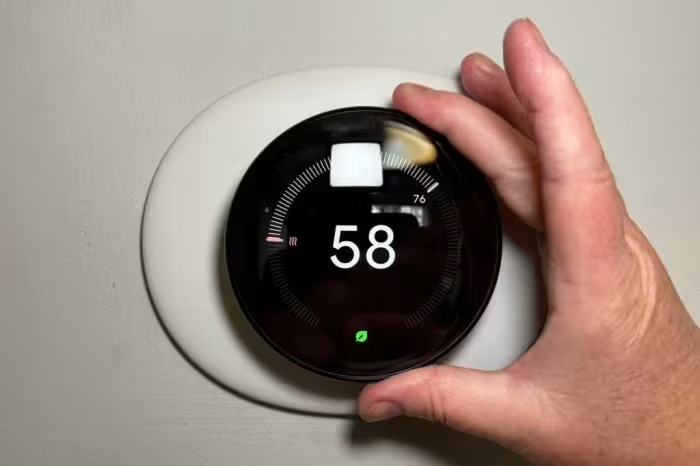
Nest Learning Thermostat
A premium, AI-driven smart thermostat known for its iconic design, intuitive controls, and advanced energy-saving automation.
How This Score Is Calculated
- Sources analysed: 8 reviews
- Explicit scores: 0 sources
- Sentiment-only: 8 sources (weighted 1.0×)
- Split: 6 Positive · 2 Mixed · 0 Negative
- Raw weighted average: 7.9
- Formula: Σ(score × weight) ÷ Σ(weight)
- Consensus bonus +0.3: 75% sources agreed
- Final score: 7.9/10 (clamped, rounded to 1 decimal)
Algorithmically calculated from source data. No manual adjustments.
- Most reviewed featureDesign (8/8)
- Most praisedDesign
- Most criticisedHigh Price
- Reviewer consensus levelHigh
- Value for moneyFair Value (6.5/10)
The Nest Learning Thermostat remains a top-tier smart home device, celebrated primarily for its stunning, iconic industrial design and sophisticated AI-driven learning capabilities. While reviewers consistently praise its ability to automate climate control and reduce energy bills, it faces criticism for its premium pricing and lack of advanced features like multi-room occupancy sensing. It is best suited for users looking for a stylish, "set-it-and-forget-it" heating solution within the Google Home ecosystem.
🔧 Key Specifications
Specifications sourced from reviewer mentions. Verify with manufacturer for complete details.
- Display: Customisable, large screen with swivel controls
- Smart Features: AI-driven learning, Matter support
- Sensors: Motion and temperature (remote sensor included in 4th Gen)
- Connectivity: Wi-Fi, Matter, Google Home/Alexa integration
- Installation: Professional recommended (4th Gen)
- Power: No C-wire required (4th Gen)
💲 Price Range
Approx. ₹23,500
Prices sourced from reviews. Check current retailer pricing.
📊 What Reviewers Say — Feature by Feature
3 features evaluated across 8 sources.
👍 Key Strengths
- Stunning, iconic industrial design
- Advanced AI-driven learning schedules
- Seamless smart home ecosystem integration
- Easy to use mobile app interface
- Matter certified (4th Gen)
👎 Key Weaknesses
- Very high market price
- Lacks advanced occupancy-based room sensing
- Professional installation often recommended
- No touch screen interface
- Limited regional availability
💰 Value for Money Analysis
While positioned as a premium product, reviewers note that the high upfront cost makes it an investment rather than a budget purchase. The long payback period for energy savings is a common point of contention compared to cheaper alternatives.
6 of 8 sources commented on price or value.
⚡ Where Reviewers Disagreed
The following areas saw meaningful disagreement across sources.
- Installation Complexity: 3 sources note the device is easy to set up, while 2 sources suggest professional installation is recommended, especially for older HVAC configurations.
🎯 Who This Product Is For
Reviewer recommendations for different target audiences and use cases.
🛠️ Best Use Cases
- Energy SavingUtilizes AI to create schedules that effectively lower heating and cooling costs over time.Great
- Smart Home AutomationIntegrates well with Matter and other smart home standards for automated climate management.Good
🔀 Alternatives Mentioned by Reviewers
Maximise this list. Include EVERY single competitor, rival, or alternative product mentioned in any of the source reviews. Do not omit any. More alternatives and longer lists are better.
- Ecobee Smart Thermostat Premium — A direct competitor often compared to the Nest. Reviewers note it offers additional features like built-in Alexa speakers and air quality sensing, making it a more feature-packed alternative at a similar or lower price point. Choose this if you want more sensor functionality.
- Amazon Smart Thermostat — A budget-friendly alternative priced around $80. It lacks the premium design and sophisticated AI learning of the Nest but serves as a functional, low-cost option for basic climate control. Choose this if you are on a strict budget.
Alternatives sourced exclusively from reviewer mentions.
🛒 Buyer's Guide
✅ Buy This If…
- You prioritize design and want a thermostat that looks like a piece of modern art.
- You are already deeply integrated into the Google Home ecosystem.
- You want advanced AI-driven scheduling that learns your habits over time.
❌ Skip This If…
- You are on a tight budget and need a quick return on investment.
- You require advanced multi-room occupancy-based sensing.
- You prefer a touch-screen interface over a swivel-dial control.
⚠️ Things to Check Before Buying
- Check regional availability, as some models are restricted to the US and Canada.
- Verify if your HVAC system requires professional installation, as it is not always plug-and-play.
📈 Sentiment Trends Over Time
Reviews span various generations. The following changes were detected:
- Smart Features — Evolution from basic scheduling to more advanced AI-driven insights and Matter support across generations.
The Nest Learning Thermostat remains an industry benchmark for design and ease of use. While it is undeniably expensive and lacks some of the niche sensor features found in rivals like the Ecobee, its AI-driven automation is top-tier. It is the ideal choice for design-focused users within the Google Home ecosystem. If you want more utility per dollar, consider the Ecobee; if you want the best-looking smart device on your wall, choose the Nest.
Top Alternative: Ecobee Smart Thermostat Premium — Offers superior sensor functionality and built-in smart features for those who prioritize performance over pure aesthetics.
PLG_CONTENT_IMAGEGALLERY_ERROR_NO_IMAGES
Reviewer Perspectives & Source Breakdown
Sleek and Smart: Nest Learning Thermostat Review | CrackBerry - crackber...
The 4th Gen Nest Learning Thermostat is a sleek, highly capable device that excels at automating home climate control. It is an excellent long-term investment for those seeking deep smart home integration and superior HVAC compatibility.
Pros
- Sleek and bold design
- Large, customizable display
- Easy installation process
- Matter compatibility for future-proofing
- Effective multi-room temperature monitoring
Cons
- Significantly more expensive than base models
Google Nest Learning Thermostat (4th Gen) Review | PCMag - pcmag.com...
Price: approx. ₹23,500
The fourth-generation Nest Learning Thermostat is a premium device that uses AI to optimize home climate control and energy savings. While it offers a sleek design and Matter support, it faces stiff competition from more feature-rich alternatives at a similar price.
Pros
- Sleek design
- Large display
- Includes a remote room sensor
- Supports Matter
Cons
- Expensive
- No touch screen
Google Nest Learning Thermostat (4th Gen) - Review 2024 - PCMag Middle E...
Price: ₹23,500
The fourth-generation Nest Learning Thermostat uses AI to create customized heating and cooling schedules, helping you save on energy while ensuring consistent home temperatures. It is a functional and beautiful device that integrates well with modern smart home standards like Matter.
Pros
- Sleek design
- Large display
- Includes a remote room sensor
- Supports Matter
Cons
- Expensive
- No touch screen
Google Nest Learning Thermostat 4th Gen Review: Pricey but Packed With F...
Price: approx. ₹23,500
The 4th Gen Nest Learning Thermostat is a feature-rich, high-end device with a stunning design and excellent sensor integration. While it is the most expensive option on the market, it excels as a premium smart home gadget.
Pros
- Room sensor included in box
- Smart schedule adjustments
- Excellent, customizable display
- No C-wire required
Cons
- Most expensive model on the market
- Duller Google Home app experience
- Long payback period for energy savings
Nest Learning Thermostat review | TechRadar - techradar.com...
The Nest smart thermostat is an attractively designed, easy-to-use device that effectively reduces energy consumption. While the initial cost and professional installation requirements are drawbacks, it is a highly capable heating management tool.
Pros
- Attractive design
- Great mobile app
- Simple to operate
- Learns habits
Cons
- No zonal heating
- Relies on placement
- Professional installation recommended
Nest Learning Thermostat Fourth-Generation Review: a stunning design inf...
The fourth-generation Nest Learning Thermostat is a highly recommended upgrade featuring a stunning, art-like design and improved AI-driven smart features. While its lack of plug-and-play compatibility and regional availability are drawbacks, it remains a top-tier smart home device.
Pros
- Gorgeous, iconic design with swivel controls.
- Smarter learning features and actionable insights.
- Native Matter support for Apple Home compatibility.
Cons
- Limited availability in the US and Canada only.
- Not plug-and-play for previous Nest owners.
Nest Learning Thermostat 3rd generation review: Simple, powerful smart h...
The Nest Learning Thermostat is a top-tier smart heating system that excels through simple controls and a beautiful design. While it lacks expansion options like radiator valves and is relatively expensive, it remains a powerful choice for centralized home heating.
Pros
- Great design
- Easy to set up
- Supports Google Home and Alexa
Cons
- Expensive
- No Siri support
- Cannot be expanded
Nest Learning Thermostat review | T3 - t3.com...
The Nest Learning Thermostat 3.0 offers a perfect blend of iconic design, intuitive controls, and smart automation. It remains a top-tier choice for those seeking an effortless, aesthetically pleasing way to manage home heating.
Pros
- Sleek metal and glass design
- Intuitive, tactile user interface
- Seamless mobile app integration
Cons
- Lacks multi-room temperature monitoring
- Complex manual scheduling on the device
Nest Learning Thermostat, 3rd generation review: All about style | TechH...
The Nest Learning Thermostat is a beautifully designed, intelligent device that excels at hands-off climate control. While it is no longer the top market pick, it remains a highly capable choice for those seeking easy, smart integration.
Pros
- Excellent interface
- Sophisticated algorithms
- Great smart home ecosystem integration
- Stylish design
Cons
- Over-reliance on motion sensors
- Expensive
- Lacks native Apple HomeKit support
Page 1 of 2