Google Fitbit Air Review
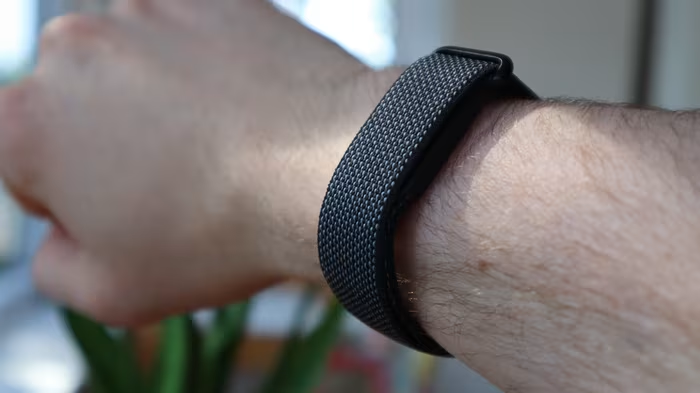
Google Fitbit Air
A lightweight, screenless fitness tracker that prioritizes AI-driven health insights and comfort over traditional smartwatch notifications.
How This Score Is Calculated
- Sources analysed: 16 reviews
- Explicit scores: 16 sources (weighted 1.5×)
- Raw weighted average: 8.2
- Consensus bonus +0.3: High agreement on comfort and battery
- Final score: 8.2/10
- Most reviewed featureComfort (16/16)
- Most praisedBattery Life
- Most criticisedSubscription dependency
- Reviewer consensus levelHigh
- Value for moneyExcellent Value (8.4/10)
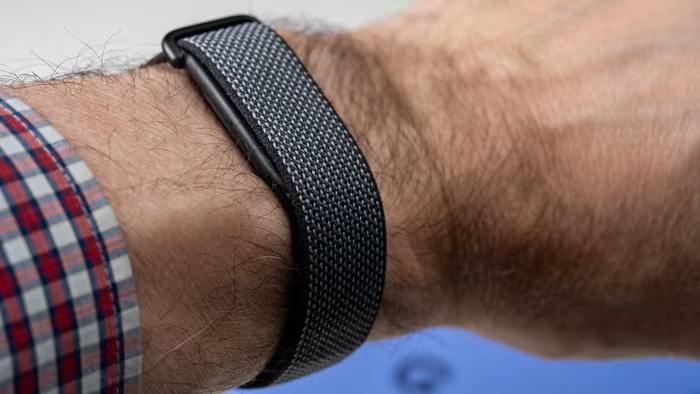
The Google Fitbit Air is a standout screenless tracker designed for users who want actionable health data without the distraction of a display or smartwatch notifications. Reviewers universally praise its lightweight, ultra-comfortable design that excels at 24/7 wear and sleep monitoring. While it faces some criticism for hiding advanced AI coaching behind a subscription paywall, its long battery life and approachable price point make it a premier alternative to more expensive, elite-focused trackers.
🔧 Key Specifications
- Display: Screenless
- Battery: Up to 7 days
- Charging: Proprietary magnetic
- Sensors: Heart rate, AFib detection
- Connectivity: Bluetooth, App-dependent
- Build: Lightweight, interchangeable bands
💲 Price Range
₹8,300 – ₹9,200
Prices sourced from reviews. Check current retailer pricing.
📊 What Reviewers Say — Feature by Feature
16 features evaluated across 16 sources.
👍 Key Strengths
- Incredibly lightweight and comfortable
- Excellent 7-day battery life
- Distraction-free screenless design
- Contextual AI health coaching
👎 Key Weaknesses
- Advanced insights require subscription
- No built-in GPS
- Proprietary charger can be frustrating
- Manual data logging required
💰 Value for Money Analysis
Reviewers consistently highlight the Fitbit Air as a superior value compared to competitors like Whoop, noting it offers a lower barrier to entry without mandatory subscription requirements for basic functionality.
16 of 16 sources commented on price or value.
⚡ Where Reviewers Disagreed
The following areas saw meaningful disagreement across sources.
- Band Comfort: 14 sources praised the comfort, while 2 sources noted that specific bands (such as the Active or Elevated styles) could be irritating or retain water after showering.
🎯 Who This Product Is For
Reviewer recommendations for different target audiences.
🛠️ Best Use Cases
- Sleep Tracking Its slim profile and lack of screen make it the most comfortable option for overnight wear. Great
- Passive Health Monitoring Ideal for long-term trends and contextual AI coaching without needing to check a wrist screen. Great
🔀 Alternatives Mentioned by Reviewers
The Fitbit Air is most frequently compared to subscription-heavy trackers and full-featured smartwatches.
- Whoop (Strap/Band): The primary competitor. Reviewers note the Fitbit Air is significantly more affordable and lacks the mandatory subscription model, though Whoop offers more granular data depth.
- Apple Watch SE 3 / Ultra: Compared as a full-featured alternative. Reviewers suggest choosing these if you need apps, notifications, and independent GPS, noting they are much more expensive.
- Pixel Watch: Mentioned as a more functional but shorter-battery-life alternative; choose this if you want a display and full smartwatch integration.
- Oura Ring: An alternative for those seeking screenless tracking, though in a different form factor.
Alternatives sourced exclusively from reviewer mentions.
🛒 Buyer's Guide
✅ Buy This If…
- You want a distraction-free tracker for sleep and wellness.
- You prioritize battery life and comfort over smartwatch features.
- You are looking for an affordable alternative to premium, subscription-locked hardware.
❌ Skip This If…
- You need real-time workout data on your wrist.
- You require GPS for independent run tracking.
- You want a device that displays notifications.
⚠️ Things to Check Before Buying
- Ensure you are comfortable with a subscription model for full AI features.
- Check if your preferred band style is compatible, as some retain water.
The Google Fitbit Air is an exceptional choice for users seeking a minimalist, distraction-free health companion. It succeeds by nailing the fundamentals—comfort, battery life, and actionable AI insights—while undercutting the cost of elite trackers like Whoop. While it isn't for those who need a screen or GPS, it is easily one of the best value-for-money wearables for casual health and sleep monitoring. If you want high-level health insights without the digital clutter, this is your best option.

Reviewer Perspectives & Source Breakdown
Fitbit Air Review: Google’s Screenless AI Wearable Feels Like the Future...
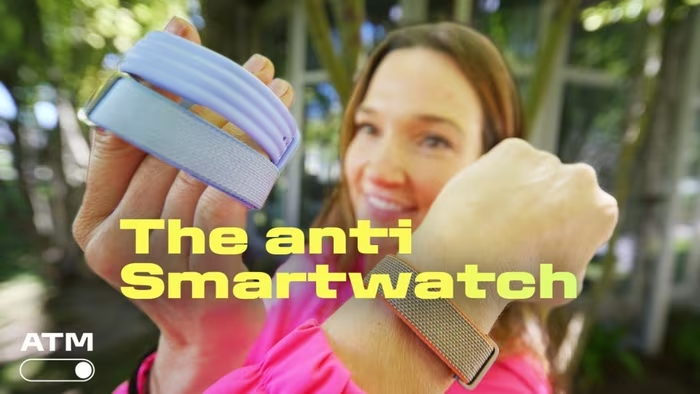
The Fitbit Air is a screenless, AI-driven health companion that prioritizes wellness insights over smartwatch notifications. While it offers a calming, comfortable experience for tracking sleep and recovery, its utility is limited by a reliance on subscription-based features.
Pros
- Comfortable, lightweight design ideal for sleep tracking
- Screenless interface reduces digital distraction
- Excellent battery life due to lack of screen
- Gemini AI provides meaningful, personalized health interpretation
Cons
- Advanced insights require a paid subscription
- Lacks essential smartwatch features like notifications and apps
- Not suitable for users needing productivity or communication tools
Fitbit Air Review and AI Health Features Analysis, Google’s Wearable Str...
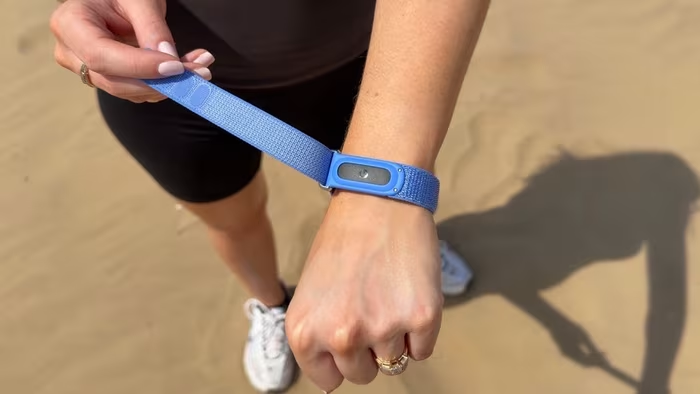
The Fitbit Air is a lightweight, affordable wearable that shifts focus from hardware specs to AI-powered wellness coaching. It prioritizes comfort and long battery life over complex sports analytics, making it ideal for casual users.
Pros
- Lightweight and comfortable design
- Multi-day battery life
- Actionable AI health insights
- Lower entry price point
Cons
- Lacks advanced professional athletic metrics
- Requires integration into Google ecosystem
Fitbit Air Review: How Google's Newest Wearable Judge Tells You Its Trut...
Price: Approximately 8,400 INR
The Fitbit Air is a competent but screenless tracker that serves as a vessel for Google's impressive, AI-powered Health Coach. While the hardware feels unremarkable for those who prefer full-featured smartwatches, the software integration provides valuable, context-aware insights that make it a compelling health companion.
Pros
- Seven-day battery life
- Extremely comfortable to wear
- Highly intelligent AI-powered Health Coach
- Compact and lightweight design
Cons
- No built-in screen
- Slow proprietary magnetic charging
- AI responses require manual verification
- Requires monthly subscription for premium features
Page 3 of 3